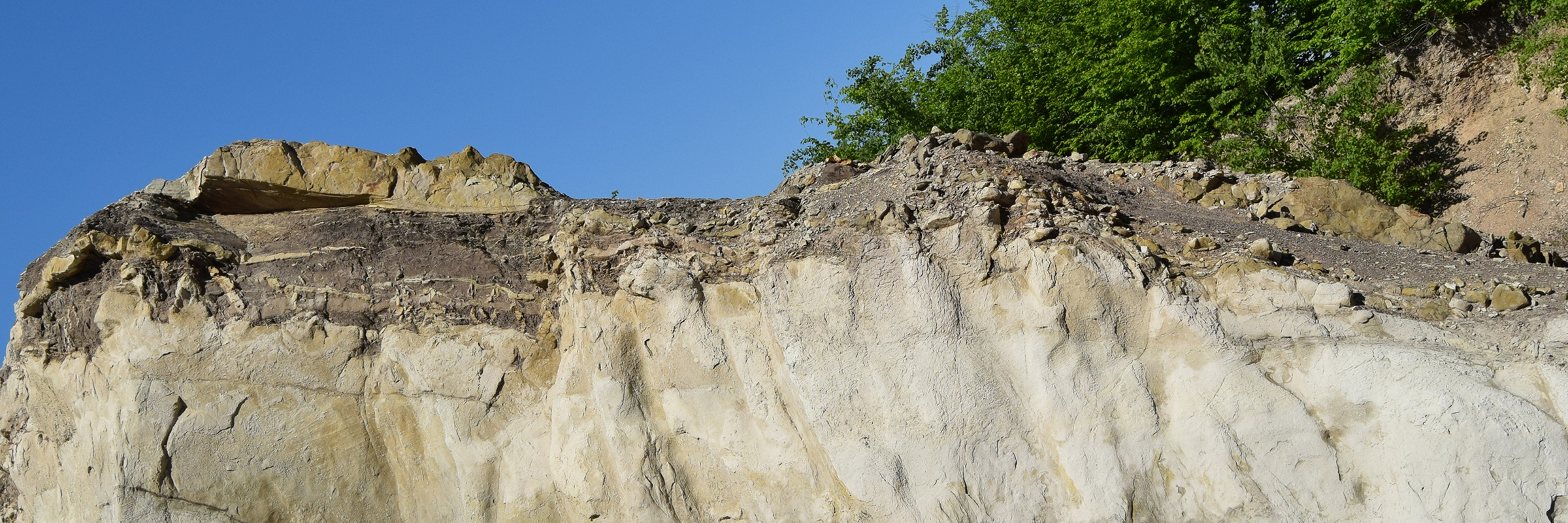
Sand injectites in a hydrocarbon-rich fold and thrust belt — world-class outcrop analogues in the Eastern Carpathians Bend Zone.
Sand injectites (structures formed by the intrusion of remobilised, overpressured and fluidised sand into adjacent strata) are commonly associated with hydrocarbon-bearing clastic reservoirs, where they can host a significant part of the reserves. They modify depositional sand body architecture, increase vertical and horizontal connectivity, alter net-to-gross, and can breach seals or change fault-seal capacity. Yet their predictability in the subsurface remains low: rarely resolved on seismic or in core, they are easily mistaken for slumps, mass-transport complexes or structural features. Outcrop analogues are therefore key to understanding these complex reservoirs.
The Eastern Carpathians Bend Zone offers a rare opportunity: spectacular exposures of Oligocene to lower Miocene deep-water siliciclastic rocks (the quartz-rich Kliwa sandstones) modified by remobilization and sand intrusion, the very same rocks that form prolific producing reservoirs at depth in Romania's largest onshore oil fields. Sills reach thicknesses of up to 4 m, comparable to the depositional sandstones, and sill-dominated outcrops provide net-to-gross ratios of 35–50%.
This field training takes participants to the most instructive natural exposures of the area to learn how to recognise, measure and interpret sand intrusions, to understand their timing and emplacement mechanisms in a contractional setting, and to translate outcrop observations into better subsurface reservoir characterisation.
A field-based course built on peer-reviewed research carried out by the trip leaders in this exact area, combining outcrop work with subsurface context from one of the world's most mature hydrocarbon provinces.
A three-day itinerary through the key exposures of the Eastern Carpathians Bend Zone. The exact running order may be adapted to weather, outcrop access and group interests.
Welcome and introductory lecture on the geology of the Eastern Carpathians Bend Zone: the fold and thrust belt, the Oligocene–lower Miocene stratigraphy, and the internal Pucioasa–Fusaru versus external Bituminous Kliwa facies. In the field we visit the Colți outcrop — folded and back-thrusted Kliwa sandstones interbedded with dysodiles, a sill-dominated exposure where dykes emerge from sills and remarkably intact host-rock inclusions record pre-intrusion consolidation. We continue to Valea Rea, the classic locality for the upper Kliwa sandstone and an essential surface analogue for subsurface reservoirs, with overturned metre-thick sandstones and sheared dykes hosted in thin dysodiles.
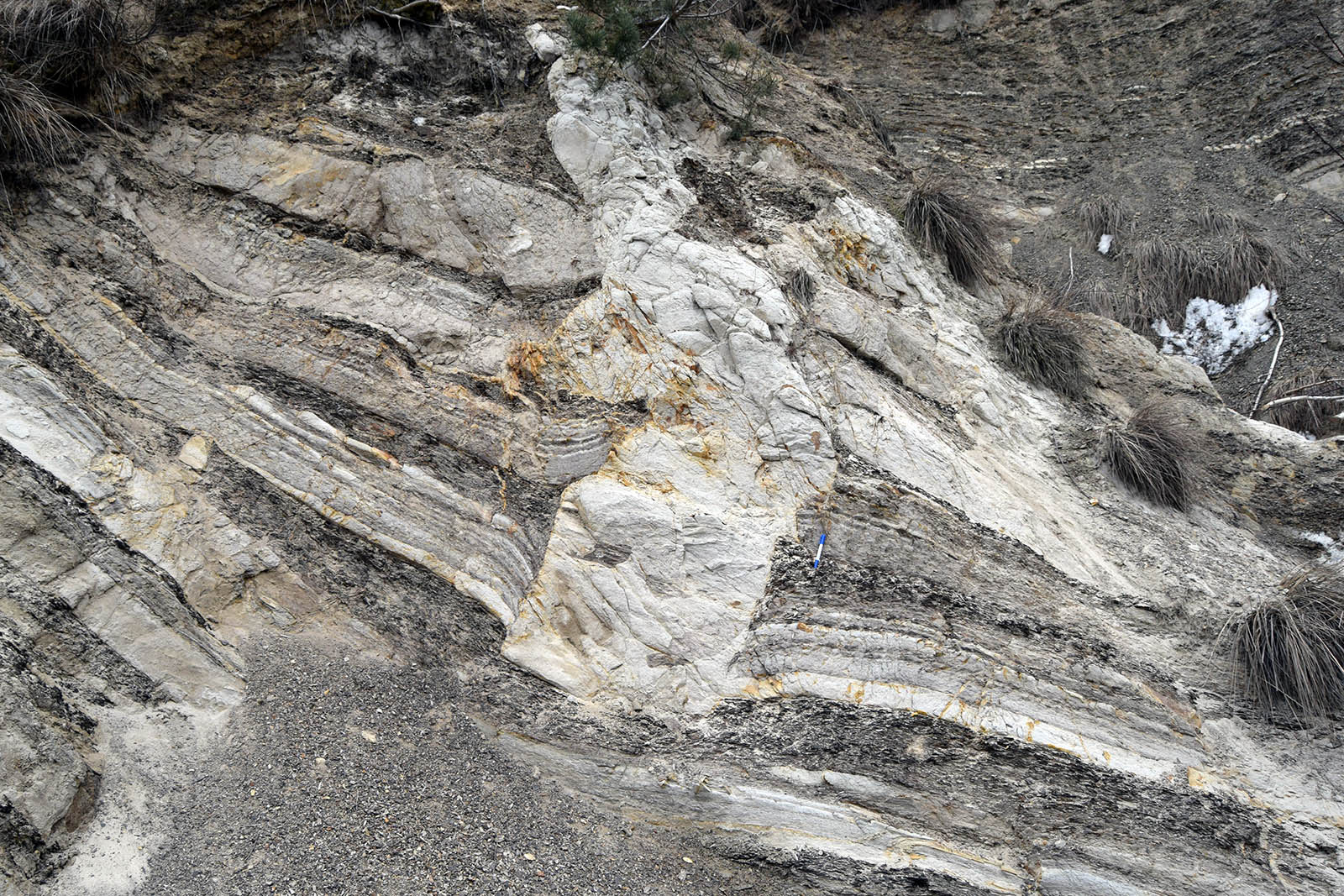
At Sibiciu de Sus, recumbent folds verging WNW expose the uppermost part of the upper Kliwa Formation. Here we examine the interplay between folding and fluidization: sandstone layers that thin towards fold cores and thicken towards the edges, offshoots initiated during fold tightening, ptygmatically folded dykes and deformation bands recording post-emplacement compaction. The day closes with a synthesis discussion on the timing and trigger of intrusion — syn-kinematic remobilization driven by fluid overpressure during active contractional tectonics — followed by the transfer to the Teleajen area.
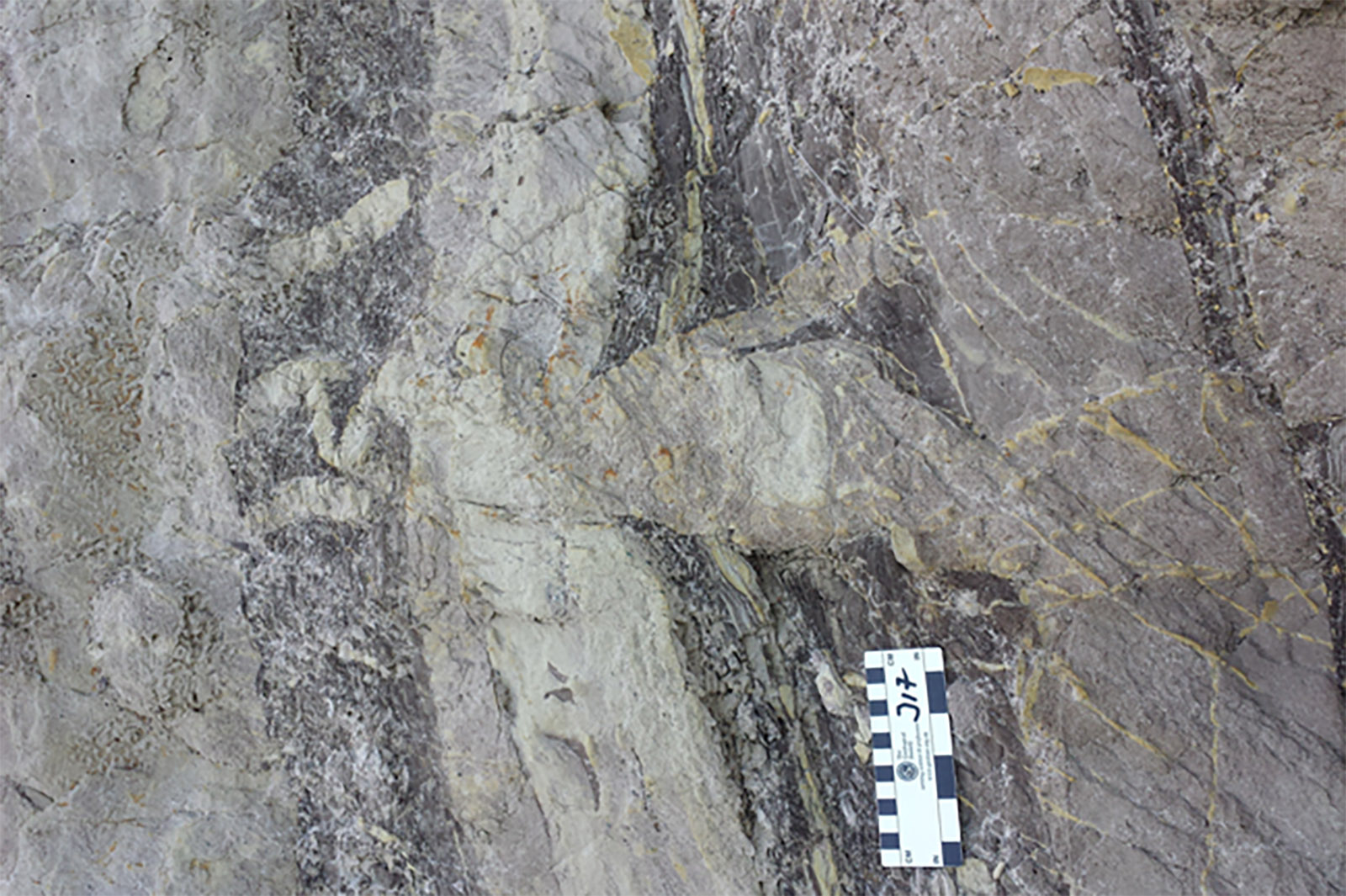
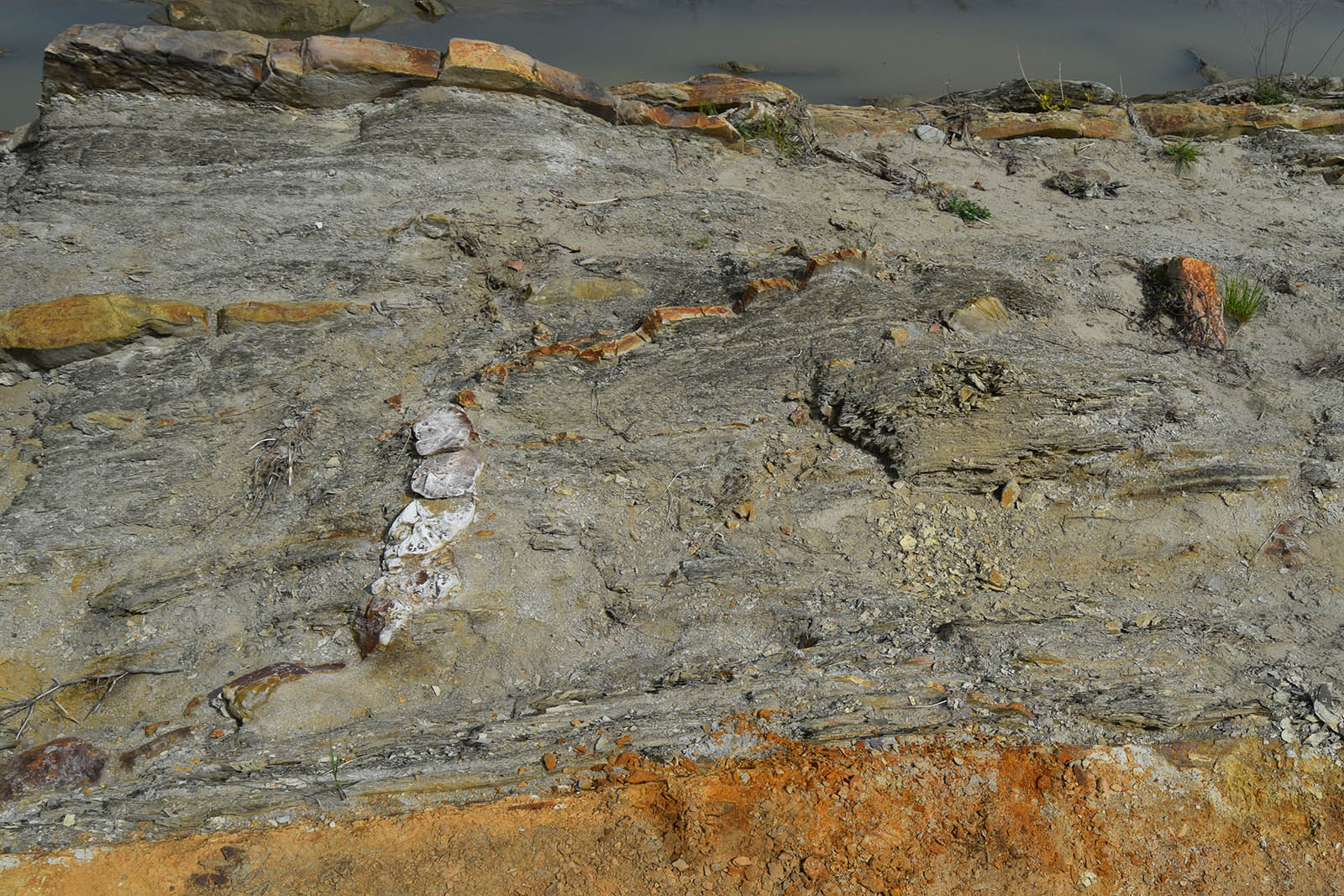
In the Teleajen River bed, an almost continuous lower Miocene succession exposes interconnected, grid-like networks of reddish dykes and sills with a net-to-gross of about 35%, including low-angle offshoots and stair-stepped dykes. At Poiana Copăceni — a structural high on a major hanging-wall anticline, where sill-dominated outcrops reach a net-to-gross of about 50% and sills up to 4 m thick — exposed bedding planes allow hands-on analysis of the relationship between fold-related fracture sets and dyke orientations. We conclude with the petroleum-system implications: connectivity, reservoir volume, fault seal and the well-correlation challenges these intrusions create in the producing fields of the area.
A degree-level background in geology or a related geoscience discipline is recommended. Familiarity with basic structural geology and clastic sedimentology concepts will help participants get the most out of the course; no prior experience with injectites is required. Participants working with subsurface data (seismic, well logs, core) will find the outcrop-to-subsurface discussions directly applicable to their own datasets.
The trip involves moderate physical activity: short walks and hikes on uneven terrain, visits to quarries, and outcrops in river beds. Participants should be comfortable walking a few kilometres per day and be prepared for changeable weather. Sturdy boots and field clothing are required; safety equipment requirements will be communicated before the trip.